
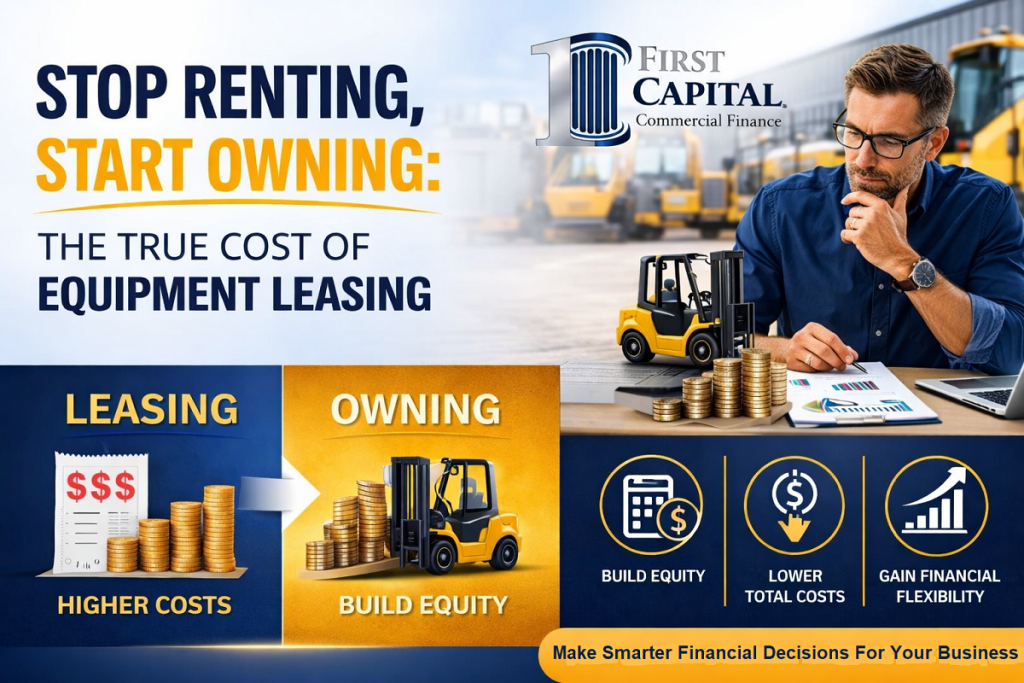
Stop Renting, Start Owning: The True Cost of Equipment Leasing
Understanding the true cost of equipment leasing is a must. For many businesses, equipment leasing feels like the easy choice. Low upfront costs, predictable monthly payments, and quick approvals make leasing attractive—especially for companies focused on preserving cash flow.
But here’s the reality: leasing often costs far more than owning in the long run.
If your business relies on equipment to operate or grow, understanding the true cost of equipment leasing is critical to making smarter financial decisions.
Why Businesses Choose Equipment Leasing
Before breaking down the costs, it’s important to understand why leasing is so common.
Leasing allows businesses to:
- Avoid large upfront capital expenditures
- Access equipment quickly
- Preserve working capital
- Maintain predictable monthly expenses
- Bypass strict bank lending requirements
On the surface, it looks like a win. But the long-term financial implications tell a different story.
The Hidden Costs of Equipment Leasing
1. Higher Total Cost Over Time
Leasing spreads payments over time—but adds interest, fees, and profit margins for the leasing company.
What this means:
- You may pay 20% to 50% more than the equipment’s actual value
- Payments continue long after the equipment has delivered its peak productivity
- You build no equity in the asset
In essence, you’re renting indefinitely without ownership benefits.
2. No Asset Ownership
At the end of most leases, you don’t own the equipment unless you:
- Pay a buyout fee
- Renew the lease
- Upgrade to new equipment (and restart the cycle)
Without ownership:
- You cannot list the equipment as an asset on your balance sheet
- You lose depreciation advantages
- You miss long-term equity growth
3. Limited Flexibility
Leasing agreements often come with restrictions:
- Usage limits
- Maintenance requirements
- Early termination penalties
- Fixed terms regardless of business performance
If your business pivots or slows down, you’re still locked into payments.
4. Compounding Financial Drain
Monthly lease payments may seem manageable—but over time they:
- Reduce cash flow
- Limit reinvestment opportunities
- Increase dependency on external financing
This creates a cycle where businesses continuously lease instead of building ownership.
Owning Equipment: A Smarter Long-Term Strategy
Ownership flips the financial equation in your favor.
1. Build Equity Instead of Expense
When you own equipment:
- Every payment contributes to an asset
- You retain resale value
- You strengthen your balance sheet
2. Lower Total Cost
While ownership may require upfront capital or financing, the total cost is typically:
- Significantly lower than leasing
- Finite—once paid off, the equipment is yours
3. Tax Advantages
Ownership allows businesses to:
- Take advantage of depreciation
- Potentially utilize Section 179 deductions
- Reduce taxable income
4. Greater Operational Control
Ownership means:
- No usage restrictions
- No contract limitations
- Full flexibility to adapt, sell, or upgrade
When Leasing Still Makes Sense
To be precise, leasing isn’t always the wrong choice.
Leasing may be beneficial when:
- Equipment becomes obsolete quickly (technology, medical devices)
- You need short-term use
- Cash flow constraints are severe
- You’re testing a new line of business
However, for core, revenue-generating equipment, leasing is often the more expensive path.
The Real Issue: Cash Flow Constraints
Most businesses lease not because it’s cheaper—but because they lack the capital to purchase equipment outright.
That’s where smarter financing solutions come in.
Instead of leasing, businesses can leverage:
- Equipment financing
- Asset-based lending
- Accounts receivable financing
These solutions provide liquidity while allowing you to retain ownership.
Stop Renting Your Growth
Leasing can feel like a shortcut—but over time, it quietly erodes profitability and limits long-term growth.
Owning equipment:
- Builds equity
- Reduces long-term costs
- Strengthens your financial position
- Gives you full control over your operations
The question isn’t whether you can afford to own equipment.
It’s whether you can afford not to.
Final Thoughts
The true cost of equipment leasing goes far beyond monthly payments. It’s about lost equity, higher long-term expenses, and reduced financial flexibility.
If your business is serious about scaling, improving margins, and building long-term value, it may be time to rethink leasing—and start owning.
Get the Equipment You Need—Without the Leasing Trap
Don’t let leasing drain your profits and limit your growth. Take the next step toward ownership and long-term financial strength.
👉 Get a Free Funding Quote Today
Or speak directly with a First Capital equipment finance specialist to explore your options and structure a solution that works for you by calling (800) 497-7701.